One codebase. Three brands. Zero shortcuts.
Business, creator and trades platforms share the same engine, each with its own identity, prices and voice. Here's how I keep that fast, safe and consistent — without giving away the recipe.
Three brands, one engine
A single codebase serves busyfirm.com, joyvo.com and serviceboss.com. Brand, copy, prices and screenshots differ per site; everything else is shared and checked for parity on every deploy.
2,770+ automated safeguards
Every fix ships with a guard. A deploy is blocked if a single check fails — the same mistake never reaches customers twice.
Bring your own AI
On paid plans, builder users connect the AI subscription or API key they already have and build without spending credits. WordPress and hosted sites always run on the owner's own keys.
Hosting & domains, built in
Sites go live on a custom domain with automatic HTTPS and a forced www, plus backups and one-tap restore — no hosting panel to learn.
Secure sessions
Sign-ins renew themselves while you're active, end instantly on logout or password change, and never leave a stale "signed in" screen behind.
Tested where users are
Browser automation drives the real sites on phone and desktop sizes before I call anything done — not just unit tests.
All TypeScript up front
Every screen of the three platforms now runs on TypeScript, and the back end is moving over one area at a time — each piece proven against the one it replaces before it switches.
Checks itself every night
A full customer journey, a backup restore and every server error land in one morning report — problems are found before a customer finds them.
Built to WordPress.org's bar
Eight WordPress plugins, every one passing the official WordPress.org review checks — secure forms, clean data handling and clear disclosure of what connects where.
Shipped, shipping, next.
Every form guarded
All 16 public forms on all three brands pass a spam gate before anything is saved or sent - bots get a polite "thanks", people pass straight through.
One photo, every colour
Garments drawn the way the print network draws them - one white photo per side, tinted to the colour - on the canvas, the thumbnails and the WordPress plugin alike.
Pictures we own
Every product photo copied to our own servers and served from our own address - faster pages, nothing hot-linked, ready for Google.
Selling in 221 countries
Real shipping rates in every country the print network reaches - and an order that cannot be delivered is refused before any money moves.
On Google Shopping
All three catalogues - 550+ products each - in Google Merchant Center with real shipping; clothes carry colour, gender and age group.
Built for a team, faster releases
Back end fully to TypeScript on NestJS, a nightly check that keeps every framework and AI model current on its own, and a release pipeline that runs its checks once, not nine times.
From idea to production, alone. (Just me and the Lord.)
I design the product, write the front end and back end, build the payments and webhooks, run the servers and deploy pipeline, and answer the support emails. Owning the full loop is how three platforms ship weekly.
React · Next.js · TypeScript · Tailwind · Canvas · WebGL/three.js · Web Audio · WebRTC
TypeScript (Node) · Python · REST & WebSocket APIs · PostgreSQL · background jobs · payments & webhooks
WordPress & WooCommerce plugins (PHP) · Shopify apps · AI integration
Containers & orchestration · Linux · gated deploy pipelines · browser-automation testing
For developers, too.
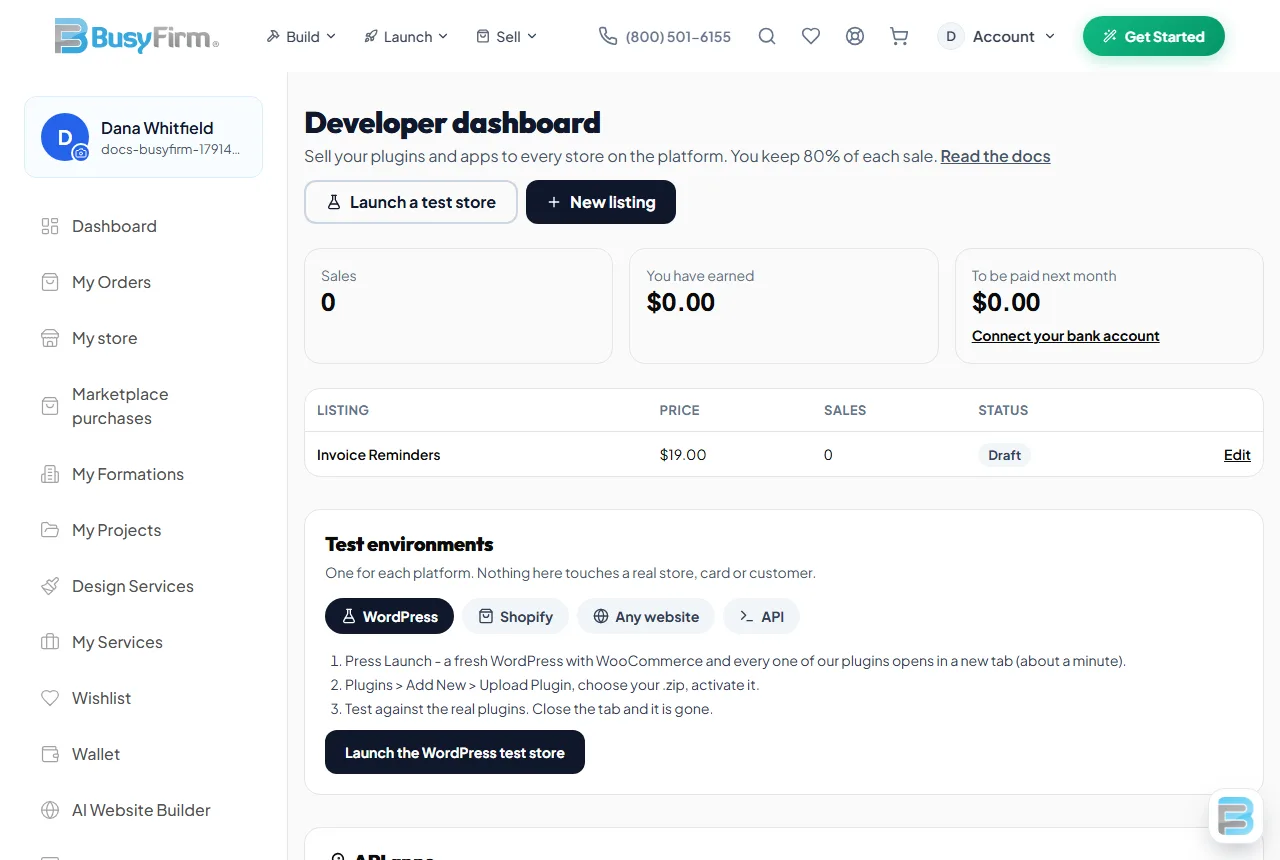
A developer portal with sandboxes, test environments, app review and connected apps.